


Educational Overview
Education extends far beyond standard academic curricula like mathematics, science, and literacy. For autistic young people, school environments play a vital role in developing foundational life capabilities, from internal emotional self-regulation to navigating complex peer interactions. When supported by a holistic, neuro-affirming framework, young people can build practical skills that foster lifelong independence, self-advocacy, and a strong sense of personal belonging.
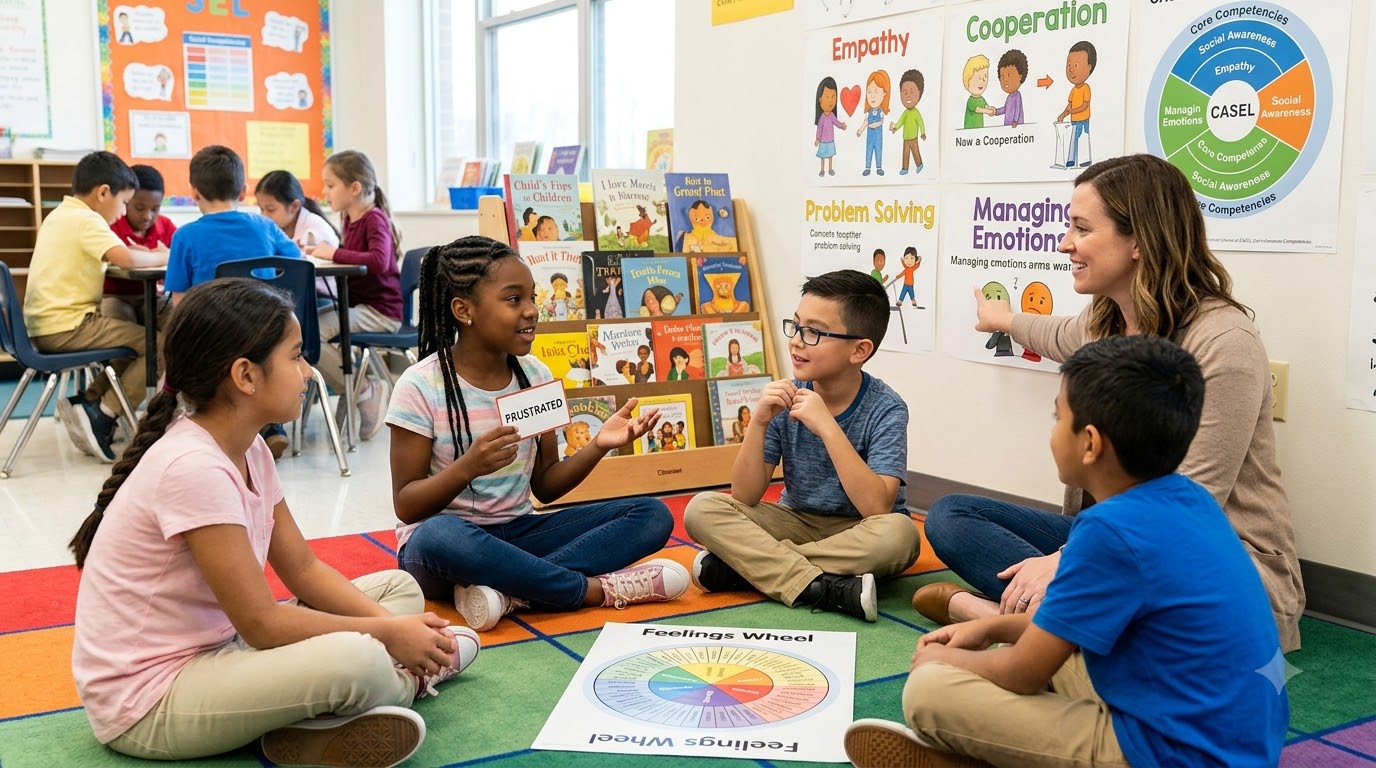
Integrating structured social and emotional learning into daily classroom routines provides a supportive environment where young people can explore these core capabilities at their own pace. Rather than treating emotional regulation or social connection as separate from academic work, embedding these skills directly into daily school routines ensures that learning feels natural, practical, and deeply meaningful.
Building Foundational Emotional Regulation Capabilities
Throughout a typical school day, young people navigate a continuous stream of sensory, cognitive, and social inputs. Bright lighting, unexpected schedule changes, noisy corridors, and group activities all require significant physiological and emotional energy. Without proactive support, managing these environmental demands can lead to cognitive fatigue or emotional overwhelm.
Modern educational approaches focus on helping young people recognise their own physiological warning signals before stress escalates into distress. Key strategies for supporting emotional regulation in the classroom include:
- Interoceptive Awareness: Guiding a young person to notice physical body signals, such as a racing heart, muscle tension, or shallow breathing, helping them identify early emotional shifts.
- Predictable Environmental Structure: Utilising visual schedules, colour-coded activity steps, and clear transition markers to reduce cognitive fatigue and uncertainty.
- Proactive Regulation Tools: Providing access to quiet sensory spaces, movement breaks, weighted supports, or fidget tools so young people can regulate their nervous system throughout the day.
By learning what their bodies need to feel calm and secure, young people gain the confidence to communicate their boundaries and manage daily transitions independently.
Navigating Peer Relationships in an Autism-Affirming School
Forming authentic peer relationships is a crucial part of childhood and adolescent development. However, traditional social skills training often focuses on forcing autistic individuals to conform to neurotypical communication norms, which can lead to social masking and burnout.
An autism-affirming school framework takes a different approach. Rather than forcing young people into rigid social moulds, educators celebrate diverse communication styles and focus on building genuine, two-way connection:
- Shared Interest Connections: Group activities built around mutual passions allow young people to form natural friendships based on shared enthusiasm rather than artificial social scripts.
- Perspective-Taking and Empathy: Teaching all young people that different neurotypes express emotion, joy, and comfort in unique ways, fostering mutual respect across the entire classroom community.
- Collaborative Problem-Solving: Guiding young people through structured, low-pressure group tasks where turn-taking, negotiation, and cooperative communication are practised naturally.
Tailoring Support Through Dynamic Personalised Learning Plans
Every young person possesses a unique combination of strengths, interests, sensory preferences, and learning goals. To ensure that support remains tailored and effective, educators, allied health specialists, and families work collaboratively to design individualised educational frameworks.
Within an autism-affirming school, personalised learning plans are dynamic and responsive documents that adapt continuously as a young person grows, develops new skills, and explores evolving interests. Rather than serving as static checklists, these personal learning plans establish clear, achievable milestones across both academic learning and emotional capability. By reviewing and updating these documents regularly, the entire support network ensures that classroom strategies align directly with the young person’s daily lived experience.
Fostering Lifelong Self-Advocacy and Authentic Independence
Ultimately, the goal of teaching emotional regulation and social connection in schools is to prepare young people for a self-determined adult life. When young people understand how their minds and bodies work, they can articulate their needs confidently, whether asking for a quiet space during a noisy task, requesting visual instructions, or setting personal boundaries with peers.
By prioritising social and emotional growth alongside academic learning, schools help young people build a resilient foundation of self-esteem, self-advocacy, and authentic confidence that supports them long after they leave the classroom.